







Blackjack
Blackjack is a contest between each player and the dealer: both draw toward 21, a hand over 21 loses at once, and the player acts first. Cards count at face value, pictures count ten and an ace counts one or eleven, whichever helps. A two-card 21, an ace with any ten-valued card, is a blackjack and pays more than an ordinary win.
What makes it unusual among casino games is that the player decides how each hand is played, and those decisions are where most of the house edge is won or lost. On a common six-deck table, a player who follows the correct chart gives up 0.41% of every amount bet over the long run. Copy the dealer instead, drawing to every total below 17 and never doubling or splitting, and that price rises to 5.68%. Every figure on these pages is an exact result for a stated set of rules, so two numbers on two pages always mean the same thing.
Popular Blackjack Variations You Can Play
The dealer checks a face-down second card for blackjack before anyone acts.
No face-down card: a dealer blackjack can take doubles and splits as well.
One 52-card pack, the best composition in the game when the payout stays at 3:2.
Several boxes against one dealer hand, each played on its own.
Two hands, and the second cards may trade places.
A side bet that the first two cards form a pair.
Four Tables to Try Free
A random four from the library, drawn fresh each week. Deal a few dozen hands with the chart beside you; the other tables, 109 in all, wait in the free blackjack games index.
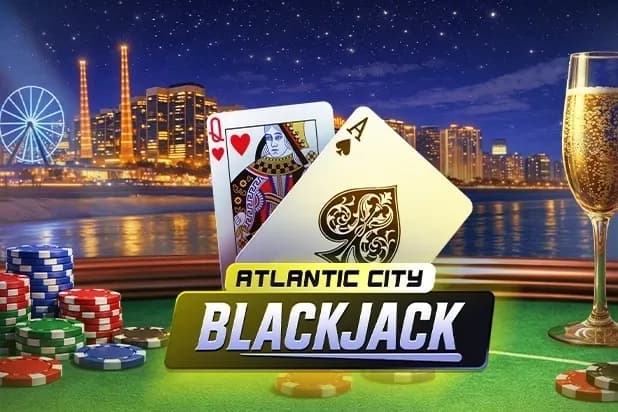

The Rules Decide the Price
Two tables can share the name Blackjack and still charge very different prices, because the edge is built from a handful of rules printed on the felt or the help screen. The payout for a natural matters most: cut from 3:2 to 6:5, it hands the house another 1.36 percentage points of every bet. A dealer who hits soft 17 adds 0.21 points, and a table with no face-down card adds 0.11 points when a dealer blackjack takes doubled and split bets too.
Other rules work in the player's favor. Late surrender takes 0.07 points off the edge, and fewer decks help as well: the same rules dealt from one deck instead of six move the game by 0.55 points toward the player. Every rule with its price sits in one table on the blackjack odds page; the chart matching each rule set is in the basic strategy guide.
Every Version at a Glance
Each figure assumes the version's usual rules, listed on its own page, and play that follows the correct strategy for those rules. Side bets are priced separately on the blackjack side bets page.
A Short History
The game is older than its name. A Spanish story published in 1613 already describes veintiuna, a race to 21 in which the ace is played high or low as needed, and the first rules printed in English, in 1800, call it vingt-un. The name blackjack is traced to the Klondike gold rush of the late 1890s; the familiar tale of a bonus for an ace of spades with a black jack has no support in the record.
Blackjack became a subject for mathematics in 1956, when four US Army mathematicians published the first optimal strategy for it in a statistics journal. Edward Thorp's book Beat the Dealer followed in 1962 and showed that tracking the cards already played could tip the game toward the player.
The casinos answered in 1964 by tightening the rules on the Las Vegas Strip, and reversed the change within weeks when players stayed away. Since then the pressure has moved to the rules themselves: more decks, continuous shuffling and the 6:5 payout, which is why reading a table's rules before sitting down matters more today than it once did.
Which Page Answers Which Question
- How does a round work? The deal, every option from hitting to insurance and the dealer's fixed rules are on the how to play blackjack page.
- What should I do with this hand? The charts for each common rule set, with the reasoning behind the hardest decisions, are in the strategy guide.
- What does a rule cost, and how often does the dealer bust? Rule by rule prices, how the dealer finishes against each upcard and how often a hand is won all live on the odds and house edge page.
- Does counting cards work? How a count is kept, what it is worth and where it is useless is explained on the card counting page.
- Is a side bet worth it? Every common side bet and its price by deck count is on the side bets page.
- Where can I practice? Every table in the library, playable without signing up, is listed under free blackjack games.
- Is this rule a good one? The payout, soft 17, surrender and insurance each have a page with their exact price, starting with 3:2 against 6:5.
- Should I split or double this hand? Every pair and every doubling hand is valued against each upcard on the splitting and doubling pages.
- Which mistakes cost the most? The common errors, ranked by what each adds to the house edge, are on the blackjack tips page.
Guides to the Game
The deal, the options and the dealer's rules, step by step.
One chart per common rule set, and why its hardest cells are right.
What each rule costs and how a round tends to end.
The Hi-Lo count, the true count and where counting cannot help.
Nine side bets and the price of each pay table.
Every demo table in the library, free with no account.
More Variations and Side Bets
An eight-deck shoe made cheaper by late surrender.
A deck without its 10-spots, repaid with bonuses and generous doubling.
Doubles and splits on the house, with a catch at 22.
Both dealer cards in view, at the price of every tie.

A poker hand made of two player cards and the dealer's upcard.
A side bet on a first-two-card total of 20.
Rules That Change the Price
The single line on the felt that moves the edge more than any other.
Whether the dealer draws to an ace-six, and how often that comes up.
Which hands to give up for half the stake, and when it is offered.
A side wager on the hole card, and why even money is the same bet.
Every pair against every upcard, with what each split gains.
The hands worth twice the stake, hard and soft.
The plays that hand the house the most, ranked by price.
Every term on the felt and on these pages, in plain words.
Blackjack FAQ
A licensed online table deals each hand from a random number generator, which is the electronic equivalent of a freshly shuffled shoe for every round. Its rules, not the dealing, set the house edge, so the help screen of a game is the place to check what it charges.
Yes. Twenty-one is the older name and is still used for the game in many places. Blackjack started as a nickname for the same game around the end of the nineteenth century and replaced the original almost everywhere.
The game is the same, but a live table is dealt by a person from a physical shoe, usually of eight decks, and is shuffled only when the cut card appears. It cannot be played for free, so the demo tables are where a strategy is practiced before any money is involved.
Look for a natural paid at 3:2, a dealer required to stand on soft 17, doubling on any first two cards and after a split, and late surrender where it exists. Each of those rules lowers the house edge, and a table that offers all of them costs less than most versions with a famous name.