Double Exposure Blackjack
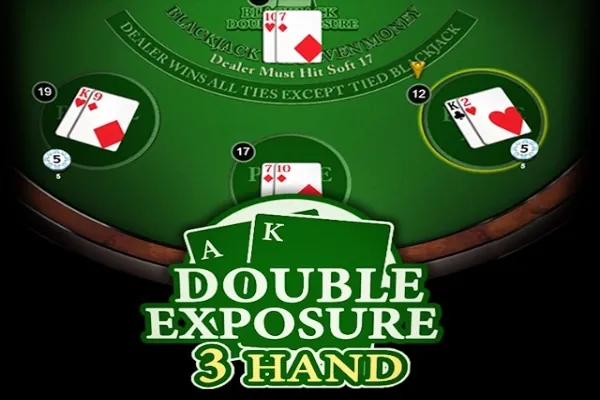
In Double Exposure both of the dealer's cards are face up from the start. You know exactly what you are playing against before you make a single decision, which removes the guesswork that most of basic strategy exists to manage.
It is the largest single concession in blackjack, and the game takes back rather more than most players notice.
What You Pay For It
The dealer wins all ties, not just some. A push is no longer a push — 20 against 20 is a loss. And a blackjack pays even money instead of 3:2.
Ties are far more common than they feel, and losing every one of them is worth more than the information is. That is why the game survives at all: seeing both cards would otherwise hand the player a large advantage.
The Trade
The spread is wide because the compensating rules vary a lot between tables. Whether a tied blackjack wins or pushes, and how far doubling is restricted, move it more than anything else.
The Strategy Changes Completely
Basic strategy is built on not knowing the dealer's second card. When you do know it, almost every marginal decision changes — you hit totals you would never hit, and stand on totals you would always hit, because you are playing a known hand rather than a distribution.
A standard chart is close to useless here, and using one gives back far more than the house edge suggests.
Double Exposure Blackjack Tables
Double Exposure FAQs
Because the dealer wins every tie and a blackjack pays even money instead of 3:2. Those two rules are worth more than the information, which is exactly how the game is balanced.
No. Basic strategy assumes you cannot see the dealer's second card. With both cards exposed you are playing against a known total, and a large share of the decisions invert.