Online Gambling in Ireland 2026 — What the New Regulator Has Actually Licensed
Ireland spent decades regulating gambling under laws written for a different century: the Betting Act of 1931 and the Gaming and Lotteries Act of 1956. The Gambling Regulation Act 2024 replaced that patchwork and created a regulator from scratch — the Gambling Regulatory Authority of Ireland.
The part most coverage gets wrong is the timing. The GRAI is not licensing everything at once, and in 2026 it is not licensing online casinos at all. The sequence so far:
• 5 February 2026 — the GRAI gained the power to process applications and issue licences.
• 1 July 2026 — remote betting and betting-intermediary operators targeting Ireland need a GRAI licence.
• 1 December 2026 — in-person betting follows.
• 2027 onwards — applications open for the remaining licence types, gaming among them.
So a site offering slots to Irish players today is not operating under an Irish gaming licence, because that licence does not yet exist to hold. It is operating under a licence issued elsewhere, in a market that is mid-transition. That is worth knowing before you read anyone's list of "Irish licensed casinos".
What the Act already changes for players is more concrete than the licensing timetable, and it is covered below. This page is general information, not legal or financial advice.
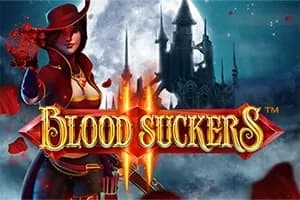
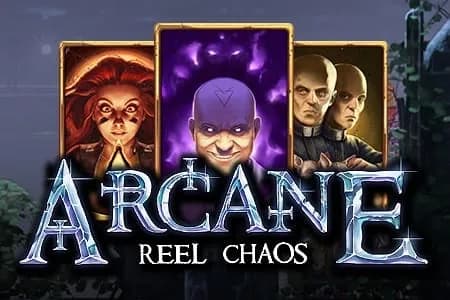
Popular Slots Available to Irish Players
Each of these opens as a free demo — no account, no deposit. The full list is on our Ireland slots page.





What the Act Changes for Players, Not Operators
No credit cards. A GRAI-licensed operator cannot accept a credit card, and cannot accept an electronic payment funded by one. It also cannot extend credit to a player. This is the clearest line in the whole Act: gambling with borrowed money is out.
One register, not one form per site. The National Gambling Exclusion Register is run by the GRAI rather than by each operator, so a single self-exclusion is meant to apply across licensed sites instead of requiring the same request twenty times.
Advertising has a watershed. Gambling advertising is barred from television, radio and on-demand media between 5.30am and 9pm, and targeted inducements — the personalised free bet, the VIP treatment aimed at someone already losing — are restricted rather than merely discouraged.
Several Irish banks also offer their own card block, applied at the bank rather than the operator. It works on the sites the Act does not reach, which is the case for most online casinos during the transition.
Paying From an Irish Account
Debit cards and Revolut carry most of the volume, and Revolut in particular is close to universal in Ireland. Deposits land instantly on both.
Credit cards are the exception that is now a rule. A GRAI-licensed operator is barred from taking them. A site outside the licensing regime may still accept one, and an Irish bank may block it anyway.
Bank transfer and e-wallets take longer and are usually the route for larger withdrawals, where a document check is more likely.
Two practical notes. Withdrawals are slower than deposits everywhere, and the difference is verification, not banking: an identity check done at registration is a check not done while you are waiting for money. And the account you withdraw to should be the account you deposited from — a mismatch is the most common reason a payout stalls.
Winnings are not taxed in Irish hands. Section 613(2) of the Taxes Consolidation Act 1997 puts betting winnings outside chargeable gains, and recreational gambling attracts no income tax. The duty exists at the operator end instead — 2% on betting stakes, 25% on exchange commission — which is why a bookmaker's margin, not a tax return, is where it reaches you.
FAQ
Yes, and it is being brought under a new licensing regime in stages. Remote betting operators have needed a GRAI licence since 1 July 2026. Licences for gaming — the category online casinos fall into — open for application from 2027, so that part of the market is still in transition.
Not yet. The GRAI has been issuing remote betting licences, not gaming licences. Any site describing itself as an Irish-licensed casino in 2026 is describing a licence that has not been created.
Not with a GRAI-licensed operator. The Act bars credit cards, payments funded by a credit card, and any extension of credit to a player. Several Irish banks also let you block gambling transactions on your own cards.
No. Under section 613(2) of the Taxes Consolidation Act 1997 betting winnings are not chargeable gains, and recreational play attracts no income tax. Duty is charged to operators rather than players.
Through the National Gambling Exclusion Register, which the GRAI administers centrally so that one request covers licensed operators rather than each site separately. Individual sites also offer their own deposit limits and exclusions, which work immediately on that site.
18, and licensed operators must verify it.
Where to Get Help in Ireland
The National Gambling Helpline is 1800 936 725. It is free, answered 24 hours a day, and run through GamblingCare.ie with funding from the Gambling Awareness Trust — an independent charity, not an operator's support desk.
Counselling is available at no cost, and the HSE has piloted gambling and gaming treatment programmes with Helplink for adults and for people aged 16 and over in parts of the west.
The practical tools matter as much as the helpline. A deposit limit set before a session is worth more than any decision made during one, and the exclusion register exists precisely because the moment you most want to stop is the moment a site is least convenient to argue with.
Gambling in Ireland is for adults aged 18 and over.