Casino Poker
The games on this page use poker hands and poker names, and nothing else from the poker room. You bet an ante, the dealer deals, and your hand is compared with the dealer's under a fixed rule: there are no other players, no bluffing, no reading of faces, and the dealer plays by a procedure printed on the felt. Each title is its own game with its own deal, its own decision and its own pay tables, which is why the guides here treat them separately.
What they share is a structure. An ante goes down, the cards come, you either raise or fold, and the dealer's hand must reach a minimum, called qualifying, before the raise is paid at all. The how-to-play guide runs a hand of each game, the odds page prices the bets, and the strategy guide gives the one decision rule that has been settled exactly.
Casino Poker Guides
A hand of Three Card Poker, Caribbean Stud and Casino Hold'em each, the ante and raise, qualifying, and the words on the felt.
How often each three-card hand turns up, what three Pair Plus tables cost, and the exact price of ante and play.
The Q-6-4 rule, why it is right, how often it has you raising, and what the side bets do to a session.
Every Pair Plus and ante bonus schedule priced exactly, what each line is worth, and the free tables that play it.
Five cards each and one dealer card up: the exact cost of the standard table, four others, and what the ace-king decision is worth.

Every casino poker table here, open in demo mode on play credits.
The Games at a Glance
The qualifying hands are the usual ones and a table may print another; the felt is the authority for the game in front of you. A plain Texas Hold'em title can be any of the three Hold'em games, or a player-against-player table, and says which only in its rules. Pai Gow Poker has no qualifier: both of your hands must beat both of the dealer's, one each way is a push, and a win pays even money less a commission.
Three Card Poker: The Hands and How Often They Come
With three cards a straight is rarer than a flush, the reverse of the five-card order, and the ranking follows the counts: the straight flush, rarest of all, sits at the top. Teen patti uses the same hands and puts three of a kind above it by convention, and the odds page says what that changes.
What a Pair Plus Table Costs
Pair Plus is a bet on your own three cards alone, paid from a schedule printed beside the ante circle whatever the dealer holds. Because the hand frequencies above never change, the schedule is the whole price. The common table paying 40 to 1 on a straight flush, 30 on three of a kind, 6 on a straight, 4 on a flush and even money on a pair gives up 2.32% of each stake.
Lower the flush to 3 to 1 and the same bet costs 7.28%; trim three of a kind to 25 and the straight to 5 instead and it costs 6.75%. One line of the schedule moves the price threefold, which is the reason every review on this site quotes the table a game actually prints rather than a figure for the game in general.
Strategy, Honestly
Three Card Poker has one decision and it has been solved: raise with queen-six-four or better and fold anything weaker. Played that way, with the dealer needing queen high to qualify and the usual ante bonus, the ante costs 3.37% of each ante, or 2.01% of everything put on the table once the raises are counted. The rule has you raising 67.42% of the time and the dealer qualifying 69.59% of the time; the strategy guide explains why the line falls exactly there.
The five-card games each carry a decision of their own, and in every one of them the dealer's up-card or the flop weighs on it as much as your own hand does. No figure for them appears on these pages: each depends on the table's own pay schedule and qualifying rule, and a number quoted for the game in general would be wrong for many of the tables listed here. What holds for all of them is general: fold the worst hands, raise the clear ones, and never let a side bet decide the main one.
Against the Dealer, Not the Table
A poker room pits players against one another and takes a small cut of each pot; the house has no stake in who wins. At a casino poker table the house is the opponent, the dealer's hand is played by rule, and the pay tables on the felt are where the house makes its margin. That changes everything about how to approach a hand. A weak hand cannot be bluffed into a win, a strong one cannot be slow-played for value, and the only question each hand asks is whether a raise is worth more than a fold against a dealer who will do exactly what the felt says.
It also means the pace is a slot's rather than a cash game's: a hand lasts seconds, and a session is many small bets rather than a few large pots. The free tables below are the simplest way to feel that difference before any money is involved.
Free Table or Real Money
A demo is where to learn which of the six games a title is and where its pay tables sit before any stake is real; the arithmetic does not change when the credits become money.
Casino Poker FAQs
Of the games priced here, Three Card Poker's ante bet at 3.37% with the queen-six-four rule. Pair Plus is cheaper only on its best schedule, at 2.32%, and dearer on the others. The other games are priced by their own tables, and no single figure is quoted for them here.
The dealer's hand fell below the minimum printed on the felt. The ante is then paid at even money and the raise is returned without being compared, however strong or weak your own hand was.
No. The dealer never folds and never reacts; the hand is played by a fixed rule. A raise with a weak hand is simply a losing bet made larger.
It depends entirely on the schedule printed beside it. The best common table costs 2.32% of each stake, less than the ante bet; cut the flush payout by one unit and it costs 7.28%. Read the schedule before deciding.
74.39% of the time, about three hands in four. A pair arrives roughly one hand in 5.9, and anything stronger is rarer still, from a flush at one in 20.16 to a straight flush at one in 460.42.
Not when the title is a house game. The three Hold'em games on this page all deal two cards and five shared ones, but the opponent is the dealer, the bets are fixed multiples of the ante, and there is nobody to outplay. A title called plainly Texas Hold'em may be any of them, or a table of real opponents, and only its rules say which.
Caribbean Stud with one addition: before deciding, you may pay one ante to replace one or more cards. The dealer's rule and the payouts are those of Caribbean Stud; only the swap is new.
More Card Games
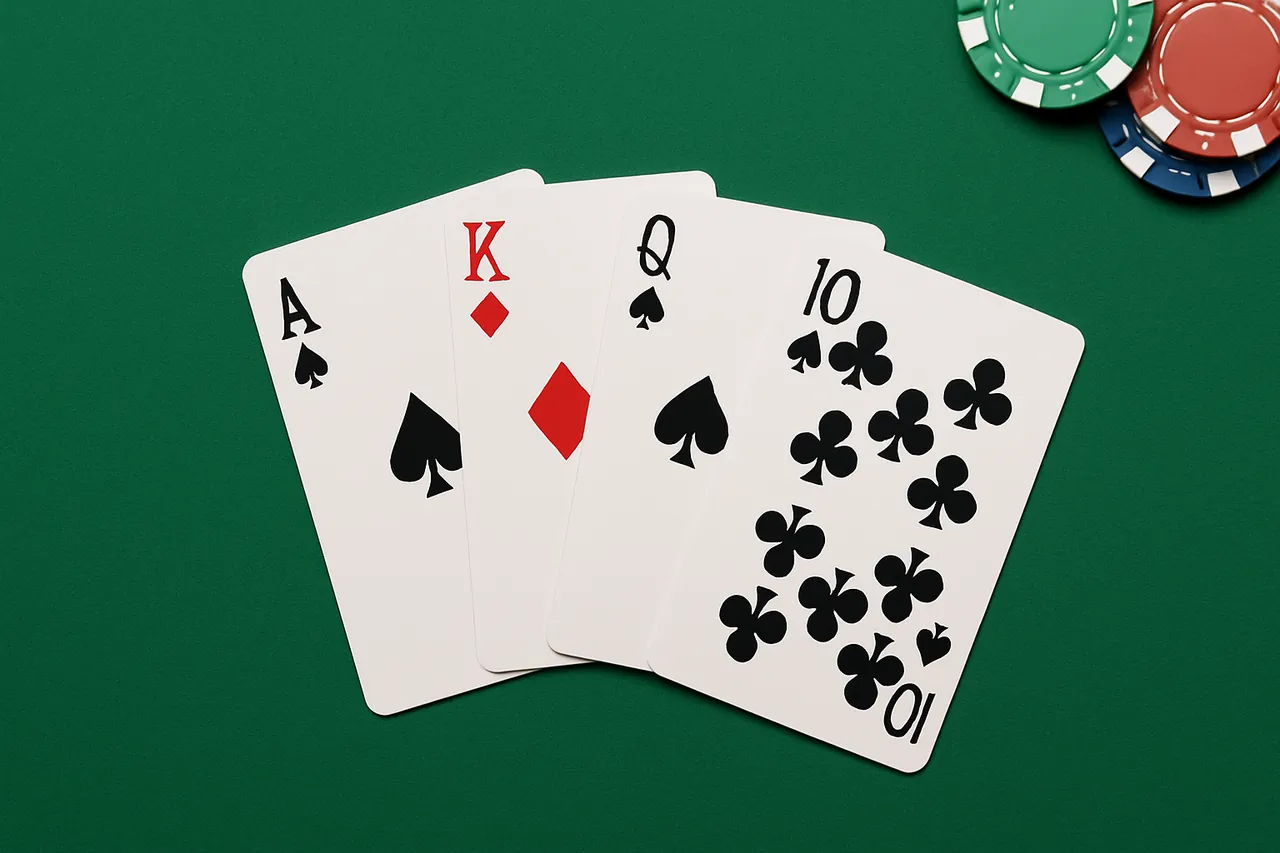
Five cards, one draw and a pay table, with no dealer hand at all.
Three cards and the Indian ranking, where a trail beats a pure sequence.
The other card game against the dealer, and the one where play changes the price.
Two hands, three bets, and nothing to decide once the chips are down.
Casino Poker Games to Try Free
Each table below opens on play credits. Read its qualifying hand and its schedules before the first ante, since those two lines are what separate one title from another. The complete list is on the free casino poker games page.