Andar Bahar
Andar bahar is as plain as a casino card game gets. One card is turned up in the middle of the table, and cards are then dealt one at a time to two rows, inside and outside, andar and bahar, until a card of the same rank as the middle one appears. The row it lands in wins. There is no hand to build, no total to reach and nothing to decide once the chips are down.
What there is to decide is which row, and the answer is not a coin toss. The row that receives the first card is the likelier to win, by a margin the deck fixes exactly, and tables pay that row less to even things up. The how-to-play guide runs a round from the joker to the payout, and the odds page prices both rows and every side bet on the number of cards.
Andar Bahar Guides
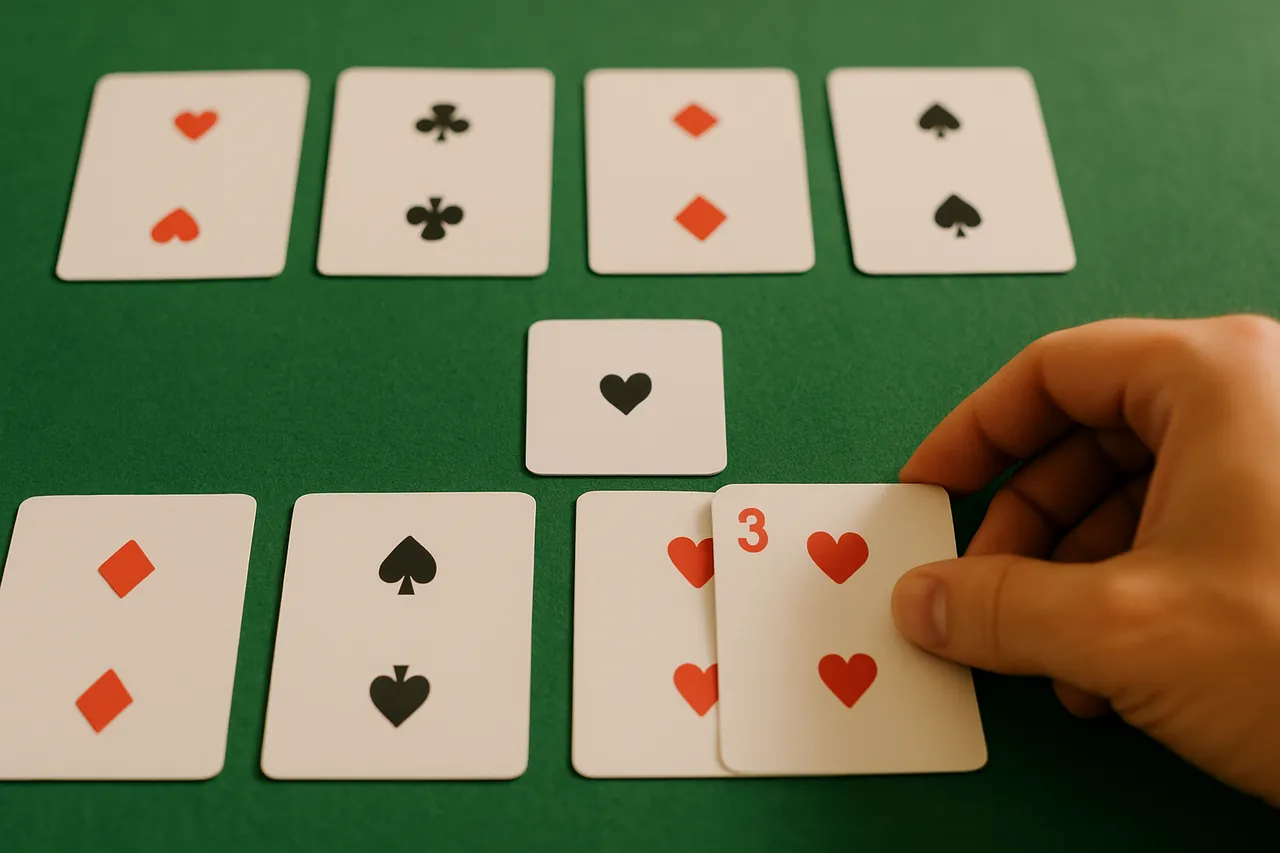
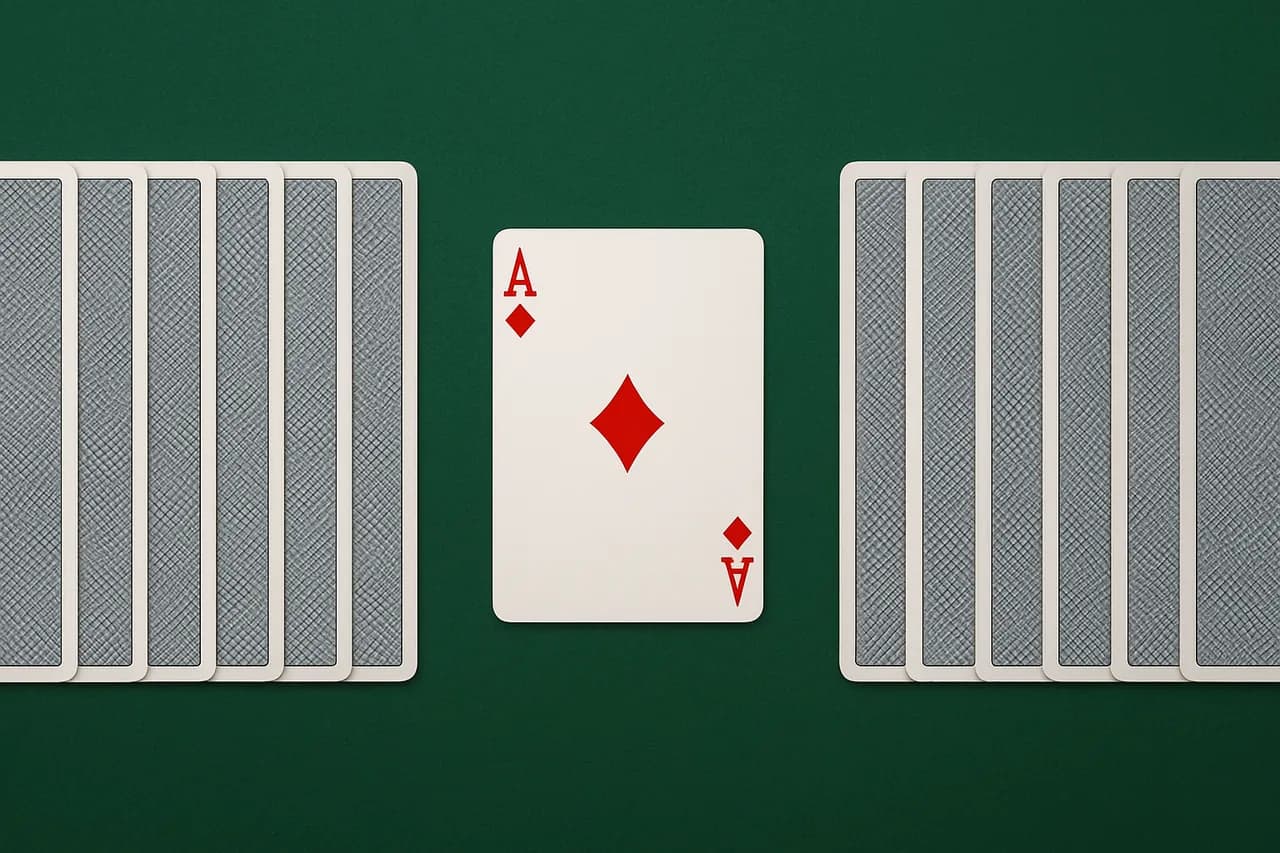
The joker, the two rows, which row is dealt first, how a round ends, and the side bets on how long it takes.
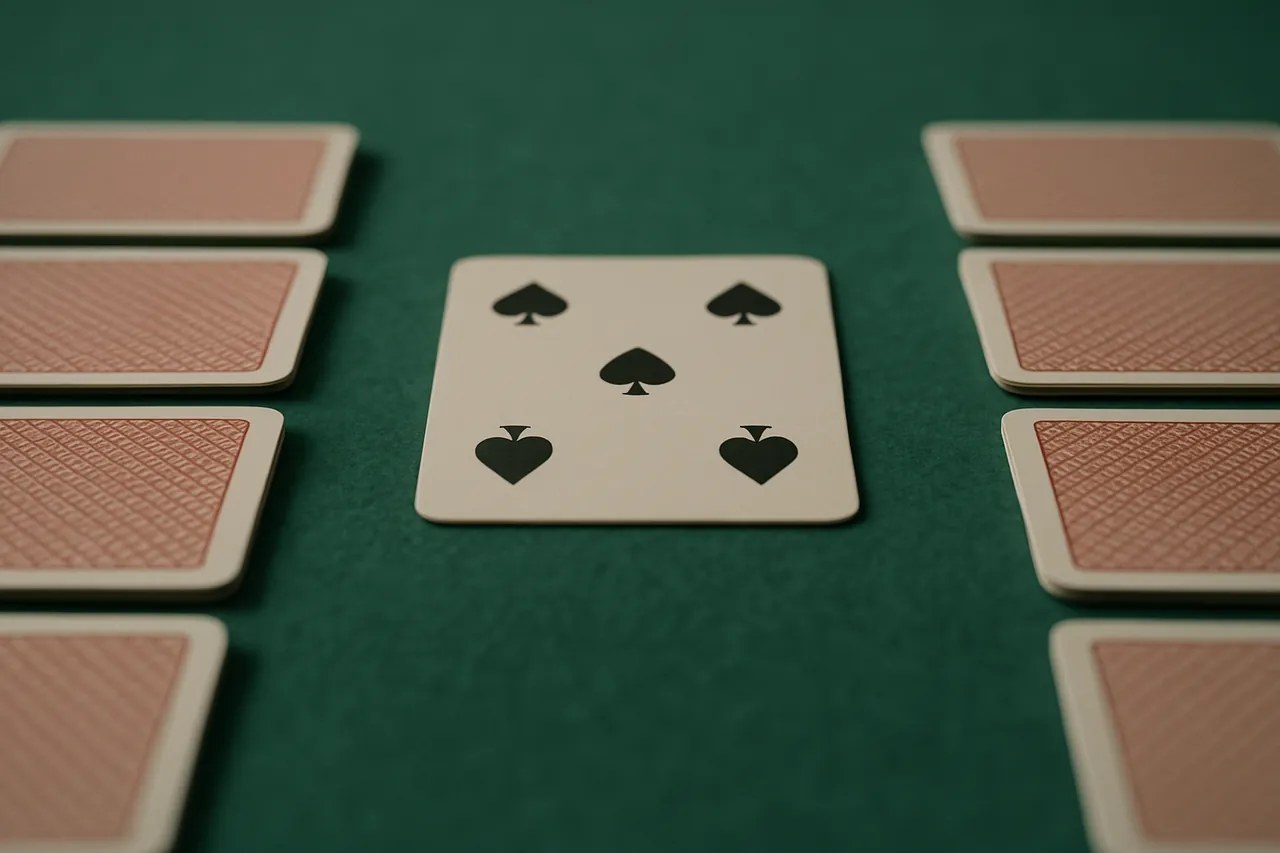
The exact chance of each row, what the usual payouts cost, and how often the match comes on each card of the deal.
Every andar bahar table here, playable on credits with no account.
Andar or Bahar: Chance, Pay and House Edge
One deck, first card to andar, at the payouts most tables print. Where the first card goes to bahar the rows change places and the figures travel with them: the side dealt first wins 51.50% of rounds and is paid 0.9:1. Other payouts, and the price of a reduced payout on a first-card match, are on the andar bahar odds page.
Why the First Row Wins More Often
Once the joker is set aside, three cards of its rank remain among the fifty-one, and the round ends the moment one of them is dealt. The row dealt first gets the first card, the third, the fifth and every odd-numbered card after that, so it has a chance of winning before the other row has a card at all. On the very first card that chance is 5.88%, and it is the second row's turn only if that card misses.
Add up every odd position against every even one and the first row comes out ahead, 51.50% to 48.50%. The casino's answer is to pay that row 0.9:1 and the other at even money, which turns a 51.50% favourite into a bet that costs 2.15% and the underdog into one that costs 3.00%.
How Many Cards Before the Match
These are the ranges most tables offer as side bets, and a round deals 13 cards on average. What each range costs at a given payout is worked out on the odds page, where the chance of the match on every single card is also listed.
Side Bets
Beyond the two rows, online tables offer bets on the round itself. The commonest is on the length of the round, in the card ranges of the table above, with a larger payout on the longer and rarer ranges. Others are settled on the joker before the deal begins: its colour, its suit, whether it is above or below an eight, or the exact rank it will show.
Each is a separate wager with a separate price. The number-of-cards bets have a chance that the deck fixes and a payout the table chooses, so the odds page can set the two side by side; the joker bets are plain bets on a single card, with a chance any reader can count from the deck and a payout printed on the area.
Strategy, Honestly
The game offers one choice and the arithmetic settles it. At the usual payouts the row dealt first costs 2.15% of each stake and the other row 3.00%, so the better bet is the row that is dealt first, whichever name it carries at a particular table. Where both rows carry one payout, the first row's advantage is wider still.
Nothing else moves the price. The joker's rank does not change the chance of either row, a run of andar wins says nothing about the next round, and a staking plan only reshuffles when the losses arrive. A side bet on the card count is a separate decision with its own price, and one worth making only after reading its payout against the chance above.
Free Play or Real Money
A free round is the quickest way to see where a title sends its first card and what it pays each row, which are the only two things that separate one andar bahar table from another.
Andar Bahar FAQs
Whichever row receives the first card: it wins 51.50% of rounds. Tables usually pay it 0.9:1 to correct for that, and even so it costs 2.15% against 3.00% on the other row.
It depends on the table. Many deal to andar first, some to bahar, and some decide by the joker's colour, black to one row and red to the other. The rules screen says which, and the payouts on the felt usually give it away: the row paid less is the one dealt first.
13 on average. 27.11% of rounds end within the first five cards, and only 0.79% run past the fortieth.
At the usual payouts, 2.15% of each stake on the row dealt first and 3.00% on the other. A table printing other payouts has other prices, and the side bets are priced separately.
Not to the main bet. Whatever rank the joker shows, three cards of that rank remain in the deck and the odds of each row are the same. It matters only to side bets settled on the joker itself.
Most casinos do stream it, with a dealer on camera. A broadcast cannot run on play credits, so no live table appears among the demos here, but the deal and the arithmetic are identical.
More Card Games
Another one-decision card game: a card each side, and the higher one wins.
The other Indian table game, with three cards a hand and the trail on top.
Two hands, a drawing rule, and the cheapest bet on a card table.
One card, one guess, and a multiplier that sets the price.
Andar Bahar Games to Try Free
Each table below runs on play credits. Check two lines in its rules before betting, where the first card goes and what each row pays, since together they set the price of the game. The full list is on the free andar bahar games page.