







How to Play Dragon Tiger
A round of dragon tiger lasts two cards. Bets are placed on Dragon, Tiger or Tie, one card is dealt face up to each of the two spots, and the higher card wins. There is nothing to add up, nothing to draw and nothing to decide after the deal, which makes it the quickest card game on a casino floor and one of the quickest online.
This page covers the ranking of the cards, the order of a round, what happens on a tie, the side bets most tables add and the vocabulary of the layout. What each bet costs under each rule is on the odds page.
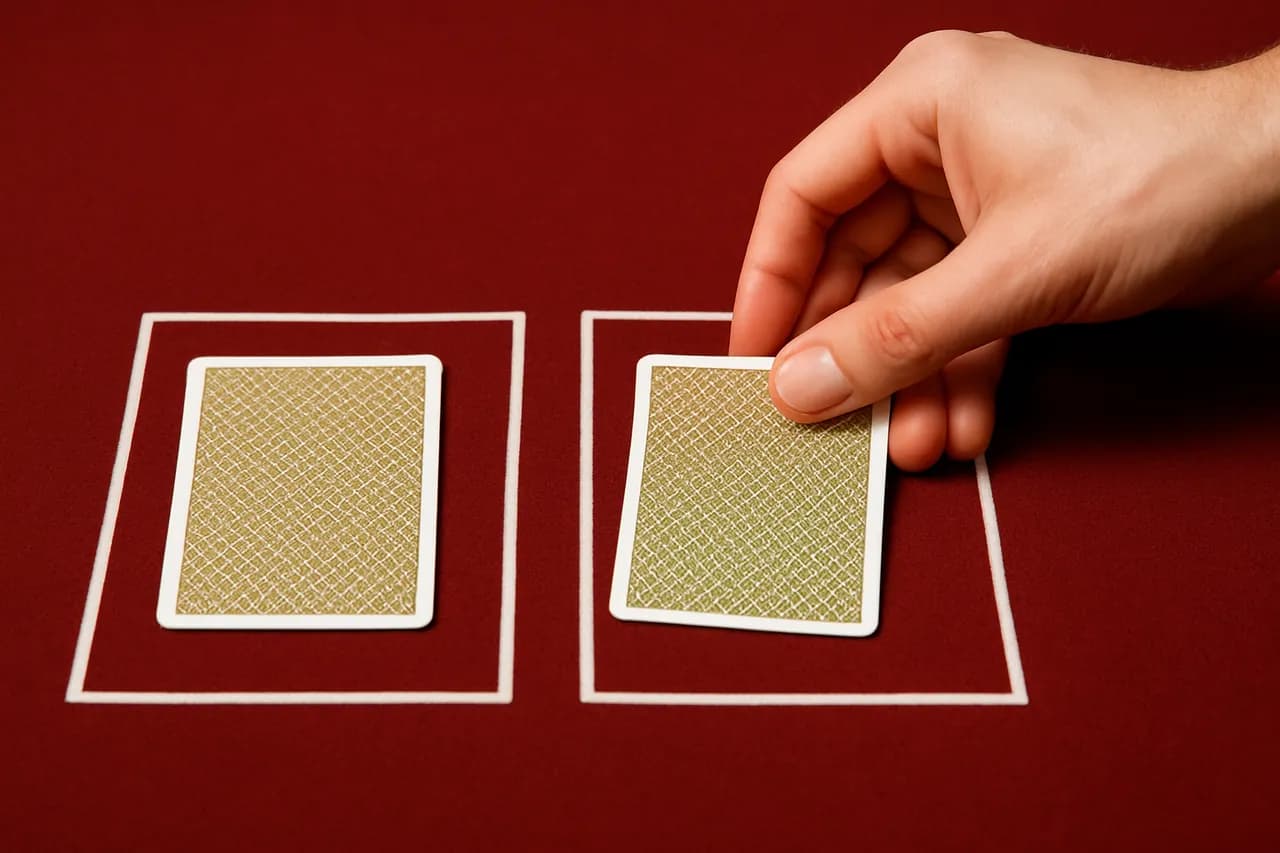
A Round in Four Steps
- Bet. Chips go on Dragon, Tiger or Tie, and on any side bets the table offers. Betting closes when the first card is dealt.
- One card to Dragon. Dealt face up to the Dragon spot.
- One card to Tiger. Dealt face up to the Tiger spot.
- Settlement. The spot with the higher card wins and its bets are paid at even money. If the two cards are of the same rank, the Tie bet collects its printed payout and Dragon and Tiger bets lose half, or on some tables all, of their stake. Side bets are settled from their own card as the layout describes.
Online tables deal from several decks at once, reshuffling when the cards run low, and show a board of recent results above the layout. Both are decoration as far as the next round is concerned.
How the Cards Rank
Players arriving from blackjack or baccarat stumble on exactly this point: a 10 and a picture card are different values here, and an ace is worth less than a 2.
What a Tie Does
A tie is the only event in the game that touches a Dragon or Tiger stake without settling it as a plain win or loss. On most tables half of the stake is taken and half returned; a few tables take the whole stake, and a few return it in full with the tie bet carrying the entire cost of the game. The rule is printed beside the betting areas, usually as a short line such as tie pays 8 to 1, Dragon and Tiger lose half.
The two halves of that line are the two prices of the table. The first is what the Tie bet is worth; the second is what Dragon and Tiger give up, since matched cards arrive roughly once in 13.39 rounds from eight decks. The odds page turns both halves into a house edge.
The rule: Matched cards neither win nor lose a main bet outright: the layout says whether half the stake goes or all of it.
The Side Bets
The 7 is the hinge of every one-card bet: it sits in the middle of the thirteen ranks and is counted out of big, small, odd and even alike, which is where those bets get their price. A table may add a Joker Bonus or a bet on the exact rank; each is settled on its own schedule.
Reading the Layout
A dragon tiger layout has three main areas across the middle, Dragon on one side, Tiger on the other and Tie between them, with the tie payout printed on the Tie area and the tie rule for the main bets printed beneath or beside it. Side bets sit above or below in a row for each spot, each with its payout on the area.
The results board, often drawn as a grid of coloured circles, records which spot won each recent round. Tables also show a tally of Dragon, Tiger and Tie results for the current shoe. Neither tells you anything about the next card; they are there because players like them.
In short: A table is priced by what it prints: the Tie area's payout, the rule beneath it, and the deck count in the rules.
Dragon Tiger Words
How to Play Dragon Tiger FAQs
Dragon, on nearly every table. It makes no difference to the odds: the order of dealing favours neither spot.
You can, but the two bets cancel except on a tie, when both lose half. It is a way of paying the house on one round in 13.39 for nothing in return.
A king can never lose, since no card ranks above it, but it can tie with another king. Likewise an ace can never win outright.
A side bet some tables add, paid from its own schedule when a particular card or combination appears. Its rules and payout are printed on its area and it has no effect on the main bets.
Yes, and most casinos offer it that way, with a dealer turning real cards on camera. A stream cannot be played on credits, so live tables are absent from the demos here; the rules are the same.