How to Play Roulette
A round of roulette is four steps and takes under a minute. Chips go on the layout, the dealer closes betting, the ball is spun against the wheel, and where it stops decides every bet on the table at once. There is nothing to act on after the spin — no decision, no draw, no second chance — which is why the game is learned in one sitting.
What takes longer is reading the layout. Every bet on it is priced identically, so the real choice is not which bet is best but how you want the money to move, and the names below are what a table uses to describe that choice.
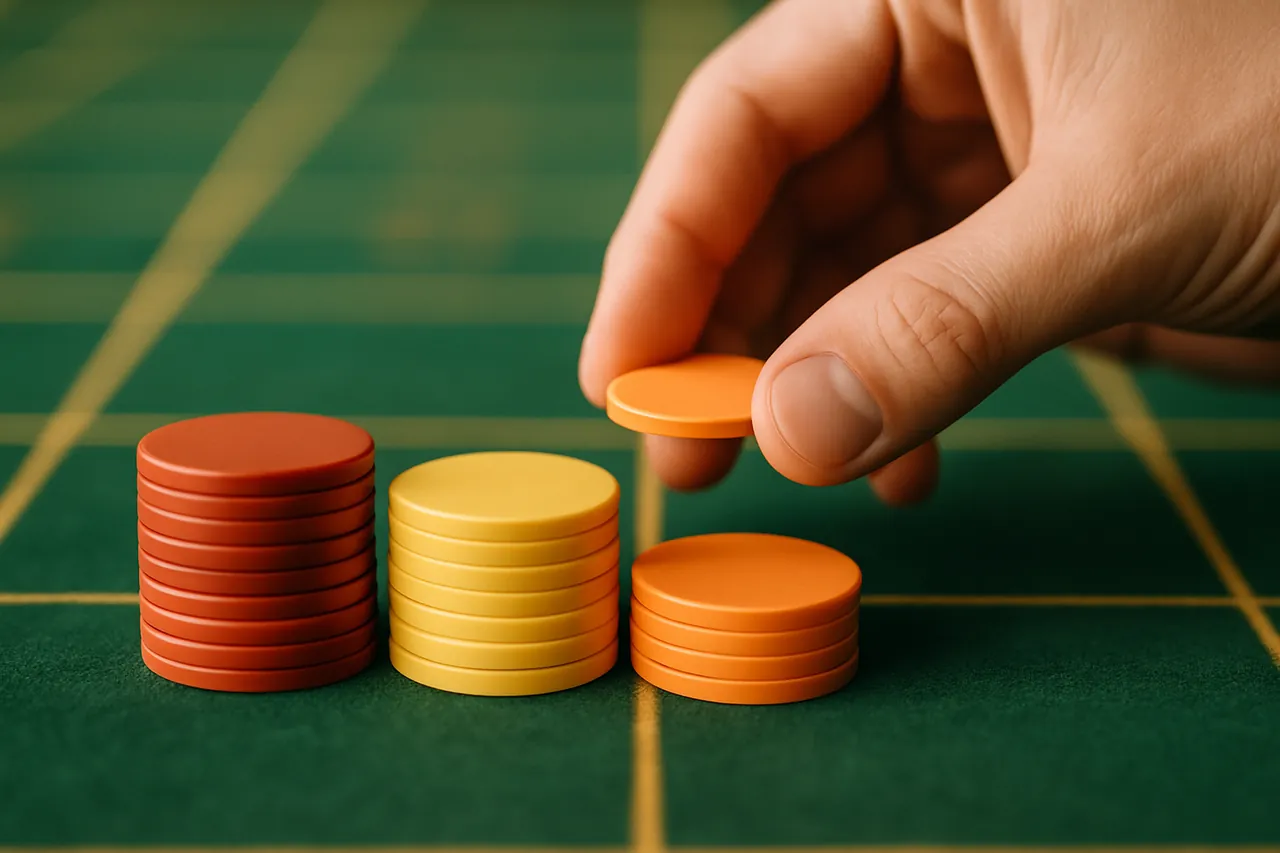
A Round, Step by Step
1. Buy in. At a live table you swap cash for coloured chips that are yours alone, so two players betting the same square can be told apart. Online, your balance is the chips.
2. Place your bets. Chips go inside the numbered grid, outside it, or on both. Betting stays open while the ball is still travelling, and the dealer calls no more bets before it drops.
3. The spin. The wheel turns one way, the ball the other. It settles into a numbered pocket, and the dealer marks that number on the layout.
4. Settling. Losing chips are cleared first, then winners are paid. Your original stake stays on the table on a winning bet unless you take it back, so a bet left untouched rides to the next spin.
Roulette Terms You Will See at the Table
Inside bet
Outside bet
Straight up
Split
Street
Corner
Six line
Column
Dozen
Even-money bet
La partage
En prison
Racetrack
The marker
The One Thing to Check Before You Sit Down
Count the green pockets. One zero is a European wheel and costs 2.70% of everything you stake; two is an American wheel and costs 5.26%. The layouts look nearly identical and the payouts are the same, so the only visible difference is the one that decides the price.
If the table also returns half your even-money stake on zero, it is running la partage, and those bets drop to 1.35% — the cheapest roulette there is. French tables are where to look for it, and every wheel here is free to try first.
How to Play Roulette FAQs
An even-money bet — red or black, odd or even, high or low. It wins 48.65% of spins on a single-zero wheel and pays 1 to 1, so the balance moves in small steps while you learn the layout. It does not cost less than any other bet; it simply moves more slowly.
Yes, and most players do. Inside and outside bets can be placed together in any combination, each settled on its own. Spreading chips across the layout does not change what the round costs you per unit staked — it changes how often something comes back.
Every outside bet loses, because the zero is neither red nor black, odd nor even, high nor low. The exception is a table running la partage or en prison, where half the stake is returned or held for one more spin. That rule is worth 2.70% down to 1.35% on those bets.
No. A winning bet's original stake stays where it is unless you pick it up, so leaving it means it rides on the next spin. Winnings are paid beside it and are yours to take or to add.
Five Things Worth Knowing Before Your First Spin
None of these change the odds. They are the things a first-time player at a table finds out the slow way.
At a live table you are given chips in a colour nobody else at that table has, because two players can back the same square. They are worth nothing away from that table — cash them in before you leave it.
The ball is already travelling while chips are still going down. Betting closes when the dealer says so, not when the wheel starts, and anything placed after that is returned.
While the dolly is standing on the winning number, nothing may be added to or taken from the layout — including your winnings from the last spin. Wait for it to be lifted.
Your original stake is not returned to you with the payout; it rides on the next spin unless you pick it up. Players lose more this way than to any system.
It is a record, not a forecast — the wheel starts from the same 37 pockets every spin. The strategy page shows why the belief is so durable and what it costs.
How to Play Roulette FAQs
An even-money bet — red or black, odd or even, high or low. It wins 48.65% of spins on a single-zero wheel and pays 1 to 1, so the balance moves in small steps while you learn the layout. It does not cost less than any other bet; it simply moves more slowly.
Yes, and most players do. Inside and outside bets can be placed together in any combination, each settled on its own. Spreading chips across the layout does not change what the round costs you per unit staked — it changes how often something comes back.
Every outside bet loses, because the zero is neither red nor black, odd nor even, high nor low. The exception is a table running la partage or en prison, where half the stake is returned or held for one more spin. That rule is worth 2.70% down to 1.35% on those bets.
No. A winning bet's original stake stays where it is unless you pick it up, so leaving it means it rides on the next spin. Winnings are paid beside it and are yours to take or to add.