






How a Live Casino Works
A live table is a television production with a betting layer. The dealer stands at a real table in a studio built for cameras: several angles on the felt, one on the dealer, and for roulette a close shot of the wheel head. The video is encoded and streamed to the player, and the game client draws the betting layout, the timer and the chip stack over it. The player never touches the stream; every bet is a message to the studio's server, and every result is a message back.
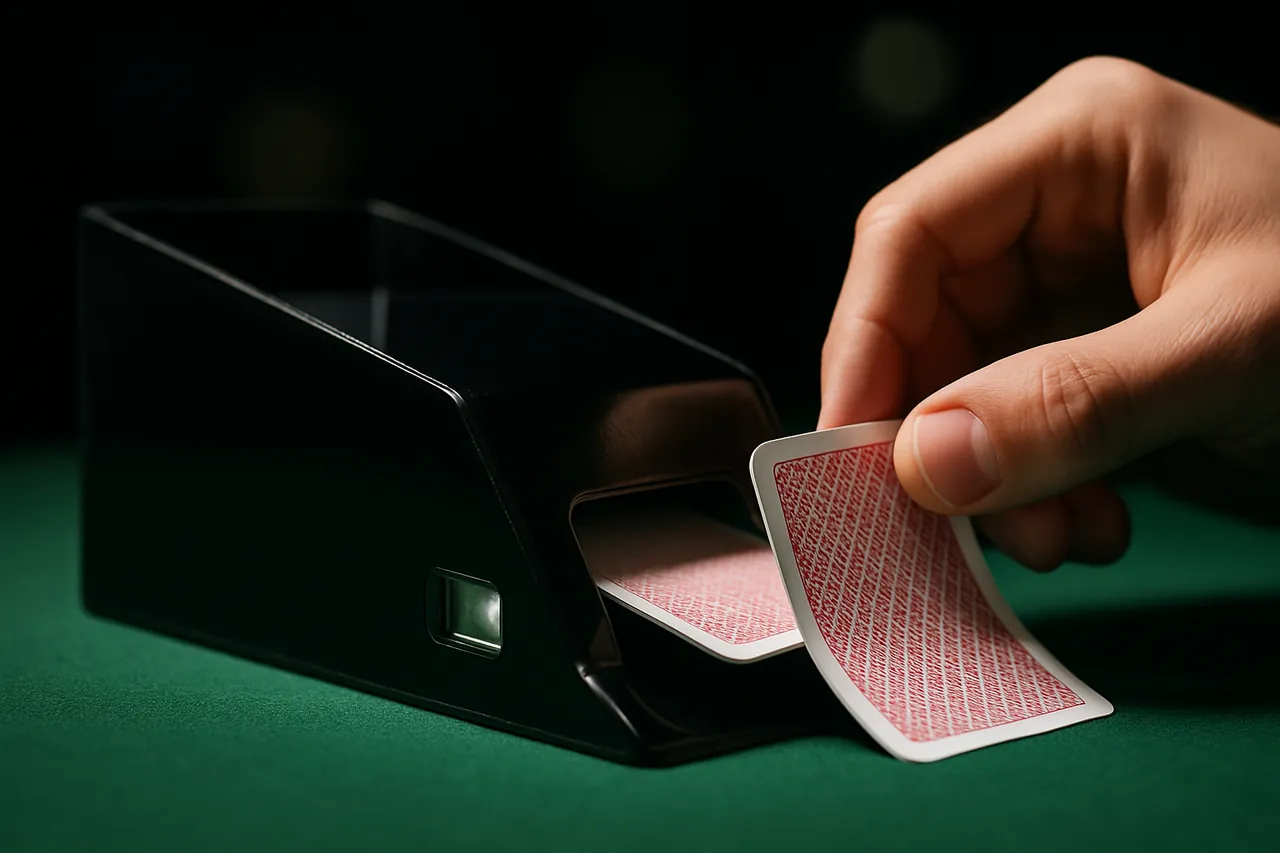
The part that makes this a casino game rather than a broadcast is how the result gets from the table into the software. A card has a barcode or a printed code read by a scanner built into the shoe as it is drawn. A roulette wheel carries a sensor ring that reports the pocket the ball settles in. A dice game uses a camera with recognition software, or a dice shaker that reports its own result. The studio's control unit matches the reading to the video, settles every open bet, and only then shows the result on the overlay.
The Studio Floor
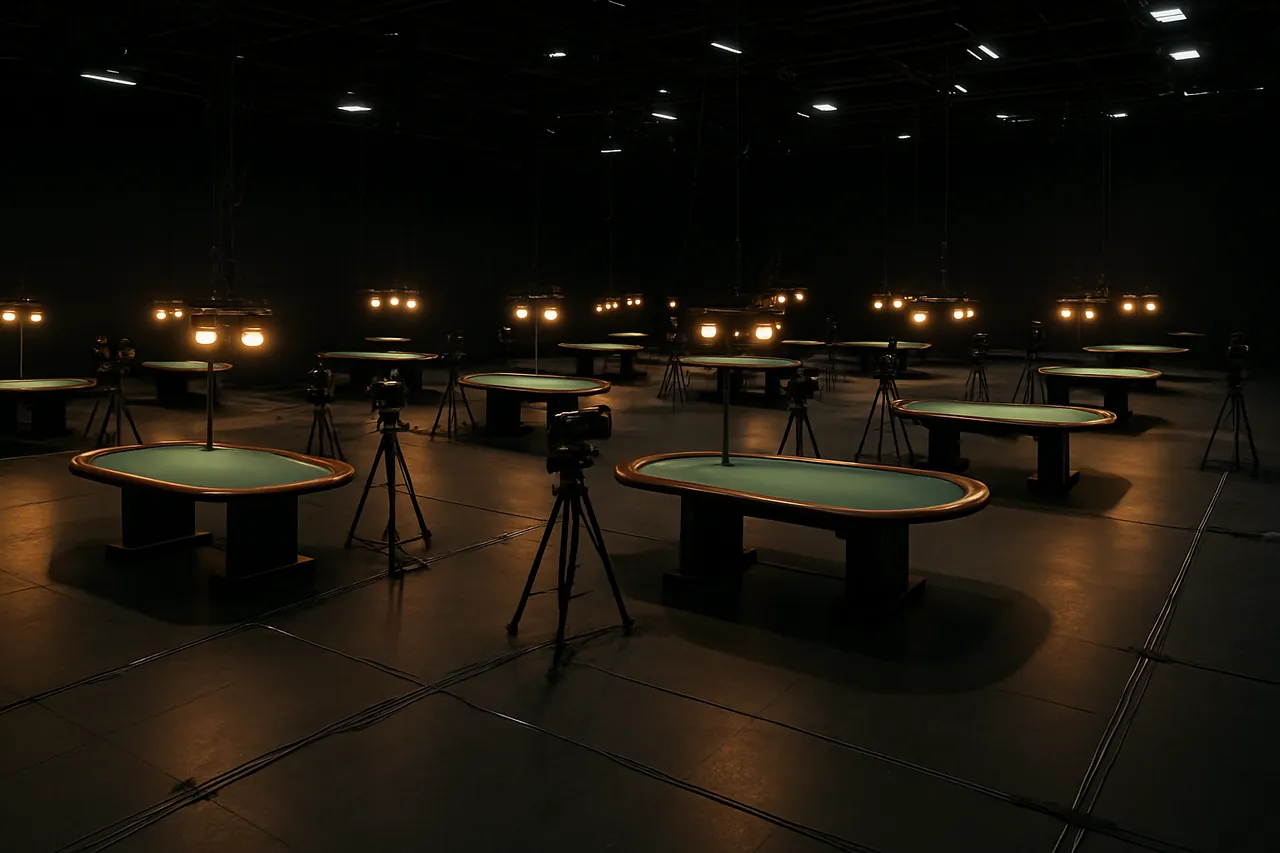
A large studio runs dozens of tables at once, each with its own dealer, lighting rig and camera set, on a floor laid out so that a camera on one table never sees another. Evolution alone streams over 2,000 tables, from floors across Europe, North and South America and the Philippines. Pragmatic Play streams from a studio in Bucharest around the clock, and Playtech runs its flagship floor in Latvia with regional studios in Romania, Spain, Peru, Brazil and three US states.
Dealers work in shifts, so a table that streams all day has several faces over a week. A studio also keeps a pit team off camera: a floor manager who steps in on a misdeal, a shuffler who prepares the next shoe, and a presenter rota for the game shows, where the host's job is pacing rather than dealing.
Dual play: Some tables are not in a studio at all. A Dual Play table sits on the floor of a land casino, and online players bet on the same spin as the people standing at it. The sensor and the overlay are the same; only the room is different.
Reading the Result
The card shoe is the piece that does the most work. Each card carries a code that a reader in the shoe scans as the card leaves it, so the software knows the dealer's hand the moment it is dealt, before the dealer has turned the card for the camera. A blackjack table with no hole card is a consequence of this design as much as a rule: the dealer takes the second card only after the players act, so there is nothing to read until then.
Roulette uses a wheel with a sensor at every pocket. When the ball settles, the sensor reports the number to the control unit, the dealer confirms it with a marker on the layout, and the software pays. The two readings have to agree; if they do not, the round is voided and bets are returned, which is the only outcome a live table can produce that an RNG game cannot. Dice tables and the money wheels in game shows read the result with the same combination of a sensor and a camera.
From the Table to the Screen
The order matters for one practical reason: the video reaches the screen a second or two after the table, so the overlay, which is driven by the reading, can show a result before the picture catches up. Pragmatic Play states a glass-to-glass latency of 1.5 to 2 seconds for its tables.
Who Checks It
A studio is licensed as a supplier, separately from the casinos that carry its tables. Evolution holds licences from the United Kingdom Gambling Commission, the Malta Gaming Authority and regulators in Belgium, Bulgaria, Denmark, Gibraltar, Greece, Georgia, the Isle of Man, Latvia, Romania, Spain, Sweden, South Africa, Tanzania, Curacao, the Bahamas, five Canadian provinces, eight US states, Buenos Aires, Panama and Peru. Playtech Live is licensed by the UK Gambling Commission (account 38516) and the Malta Gaming Authority (MGA/CRP/137/2007), and Pragmatic Play Live by the Malta Gaming Authority, the UK Gambling Commission and Romania's National Gambling Office, with certifications for Italy, Sweden, Denmark and Bulgaria. A supplier licence covers the equipment, the shuffle procedures, the card and wheel readers, and the software that settles bets.
The multipliers in the newer game shows are the one place where a random number generator enters a live table. A Lightning number, a Top Slot result or a Mega Multiplier is drawn by software before the physical result, and the studio's rules say so. The certification of that generator sits with the same testing laboratories that certify slots, under the studio's supplier licence.
What Changes for the Player
Pace. Seven players act in turn and the dealer deals by hand, so a live blackjack round runs longer than an RNG one, and a game show spins about once a minute. Fewer rounds an hour means the edge is charged fewer times, so an hour at a live table costs less in expectation than the same hour at the RNG game, even where the live rules are a little worse.
Minimums. A studio charges the casino per seat, so live minimums sit above the RNG ones and far above a demo's play credits. Infinite tables, where every player is dealt the same hand and plays it independently, exist to bring the minimum down by removing the seat limit.
Transparency. The rules of a live table are the studio's and travel with it, so the price of Evolution's blackjack is the same at every casino that carries it. The live blackjack page prices that rule set, and the studio profiles say which tables each studio deals.
How Live Casino Works FAQ
The dealer sees the table and a monitor showing which positions carry bets, so that the right cards are dealt and the right players addressed. Stake sizes and balances are not shown to the dealer.
The result is read at the table and settled by the control unit, not by the player's screen. A bet already placed is settled on the actual result; a bet not yet confirmed when the connection dropped is not placed.
The reader in the shoe or the wheel sensor reports the result before the encoded picture reaches the screen, and the overlay is driven by the reading. The delay is a second or two with most studios.
It is rare and it is the correct outcome when the dealer's marker and the wheel sensor disagree, or when a card is exposed out of turn. All bets on the round are returned.
The studios hold supplier licences from regulators such as the UK Gambling Commission and the Malta Gaming Authority, which cover the equipment and the settlement software. The software-drawn multipliers in game shows are certified like any random number generator.