





Jacks or Better
Jacks or Better uses the five-card hands and single draw of draw poker, but there are no opponents, no betting rounds and no bluffing: you receive five cards, choose which to keep, draw once, and the final hand is paid from a fixed table printed on the screen.
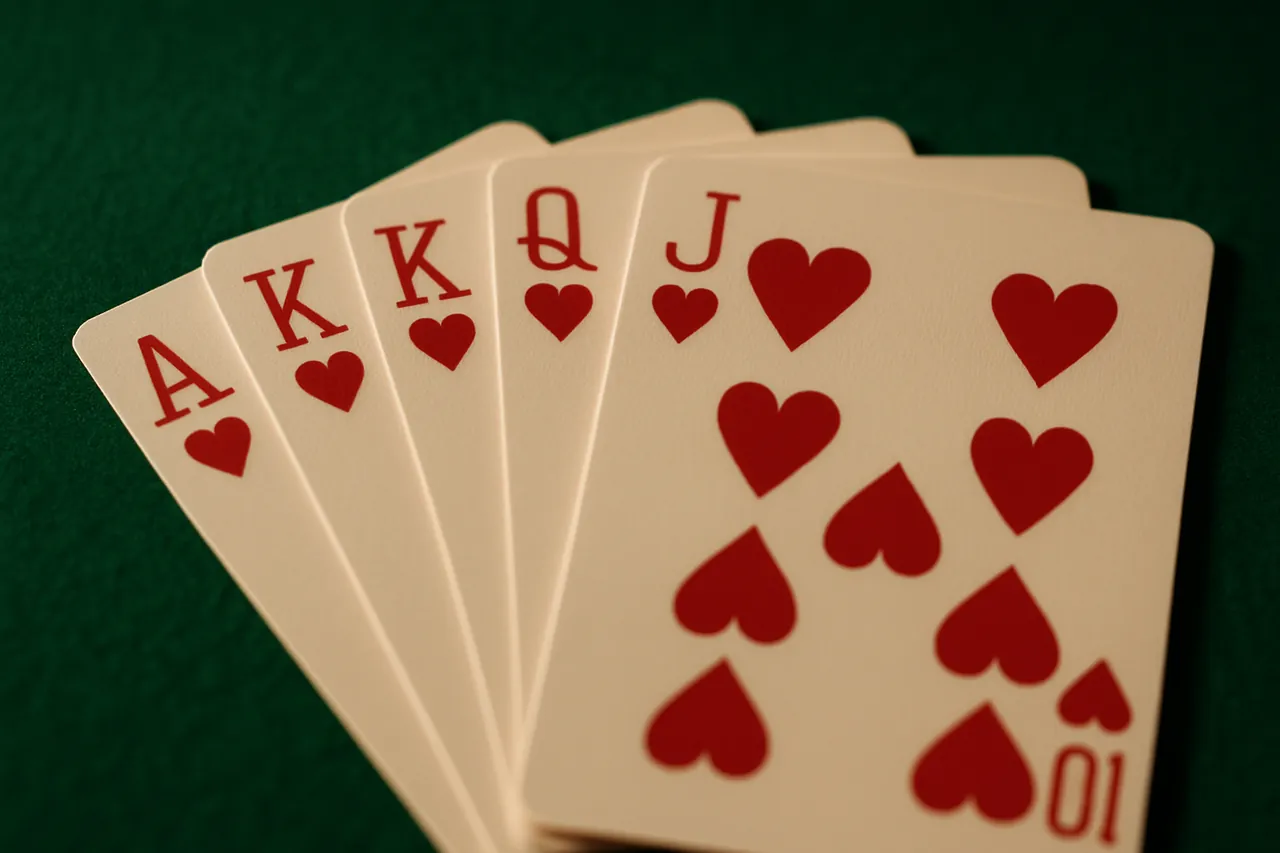
The lowest hand on that table is a pair of jacks, queens, kings or aces, and it returns the bet. A pair of tens or lower pays nothing. No card is wild, and every four of a kind pays one flat amount whatever its rank. The bonus games in the family are built by changing lines of this table, and the wild-card games by changing its rules as well. The ranking of the hands themselves, with example cards, is in our how-to-play guide.
Play Jacks or Better Free
The Jacks or Better games here open in demo mode in your browser, with no registration and no deposit. Open the pay table on screen before you settle on a version.
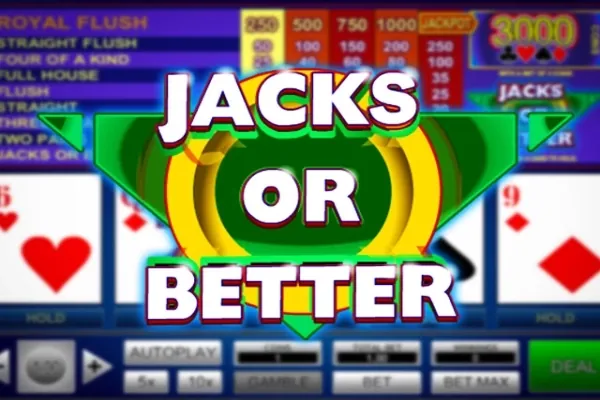








The 9/6 Pay Table
Per-credit pays at a five-credit bet, where the royal's 800 per credit comes to 4,000. The two tables differ on the full house and the flush only.
Jacks or Better Schedules and Their Returns
All six are the same game with the same lines everywhere else; one credit on the full house is worth a little more than one credit on the flush, which is why 9/5 edges out 8/6.
Jacks or Better in Our Library
Platipus, Playtech and Dragon Gaming run 9/6, the top schedule above, at 99.54%.
The key number: Every hand-count version of Habanero's game runs 7/5. That is a short-pay table: 96.15% under perfect play, against 99.54% for 9/6, with the whole gap coming from two credits taken off the full house and one off the flush.
Bet size matters on two of these games: Playtech's return falls to 98.37% below a five-credit bet and Habanero's to 94.91%, because their royal pays its top rate only at five credits. Platipus and Dragon Gaming pay the royal at the same multiple at every stake, so 99.54% holds at any bet. The mechanics of that royal line are on reading pay tables.
Where the Return Comes From
Under perfect play on 9/6, the three smallest pays carry about 70% of the return between them, while the royal flush, for all its size, carries 1.99%. Most of what the game pays back comes from ordinary hands.
Decisions That Define Jacks or Better
Because the small pays carry the game, its hard choices mostly sit where a made pair meets a draw, and the first of them is worth seeing in numbers.
Dealt J♥ J♣ 4♥ 8♥ 2♥, keep the jacks alone: averaged over every possible draw, that hold is worth 1.54 credits per credit bet. The jacks with any one of the three low hearts beside them are worth 1.42, and every hold built on the four hearts is worth less than that.
The rule: A made pair that already pays, and can still grow into trips, a full house or quads, outweighs a flush that has yet to arrive.
No card is ever worth keeping as a kicker in this game, because every four of a kind pays 25 whatever card sits beside it. Across schedules the right holds barely move: perfect 9/6 strategy played on the 7/5 table costs 0.007 points of return, and the strategy guide shows what borrowing a strategy from a different game costs by comparison.
The Hold List for 9/6
Work down the list and keep the first line that matches the five cards you were dealt. High cards are jacks, queens, kings and aces.
- Royal flush, straight flush or four of a kind.
- Four to a royal flush, even at the cost of a made flush, straight or high pair.
- A full house, flush or straight.
- Four to a straight flush.
- Three of a kind.
- Two pair.
- A high pair (jacks through aces).
- Three to a royal flush.
- Four to a flush.
- A low pair (twos through tens).
- Four to an outside straight.
- Three to a straight flush with two high cards.
- Four to an inside straight with four high cards.
- Two suited high cards.
- Three to a straight flush with no high card.
- Three to a straight flush with one high card.
- Four to an inside straight with three high cards.
- Two unsuited high cards.
- A ten with a high card of the same suit.
- One high card.
- Nothing: draw five new cards.
Played strictly from the top, this list returns 99.50% on 9/6, just 0.043 points below the 99.54% of perfect play. On the 7/5 table one line moves: three to a straight flush with no high card drops below a single high card, and the adjusted list plays at 96.10% against 96.15%.
Jacks or Better: Pros and Cons
Select an option to sort the items by category or impact.
Advantages
The steadiest swings in the family
At 4.42 bets per hand, a bet being whatever you stake on one deal, the standard deviation of 9/6 matches 6/5 Tens or Better and is the lowest of any variant's best schedule, against 6.49 for Double Double Bonus. With perfect play, 39.1% of 100-hand sessions on 9/6 finish ahead, a higher share than on any other table on these pages.
The most forgiving hold list
None of the other eight variants on our pages has a simplified hold list that comes as close to perfect play, and the lists for Double Bonus and Double Double Bonus give up four to five times as much return.
Disadvantages
No schedule reaches 100%
The top common table, 9/6, stops at 99.54%, while the best schedules of Double Bonus, Double Double Bonus, Joker Poker and Deuces Wild pass 100% as long-run averages under perfect play, for players willing to learn a harder strategy.
Few large pays below the royal
Short of the royal, the biggest pay is the straight flush at 50, which arrives about once every 9,148 hands with perfect play; the bonus games pay 80 to 400 for four aces.
Impact Analysis
Jacks or Better FAQ
Under perfect play, 45.46% of deals end in a paying hand and 54.54% lose. Many of those paying hands are a pair of jacks or better, which only returns the bet, so a paying hand is not always a profit.
Two, far more than any other number: on 9/6 the correct hold is two cards on 63.54% of deals. It keeps one card on 15.54%, four on 11.27% and three on 5.68%. Throwing all five away is right on 3.25% of deals, and standing pat on 0.73%.
The most frequent correct play is keeping a low pair, right on 28.2% of all deals on 9/6, more than any other line of the hold list. Two unsuited high cards (15.1% of deals) and a single high card (14.6%) come next.
No. The standard deviation is 4.42 bets per hand on 9/6 and 4.38 on 7/5, almost identical. A lower schedule costs return, not volatility: the results scatter almost the same way around a lower average.
With perfect play a four of a kind lands about once every 423 hands, but it is dealt outright only once in 4,165 deals. So roughly nine quads in ten are completed on the draw.