






Tens or Better
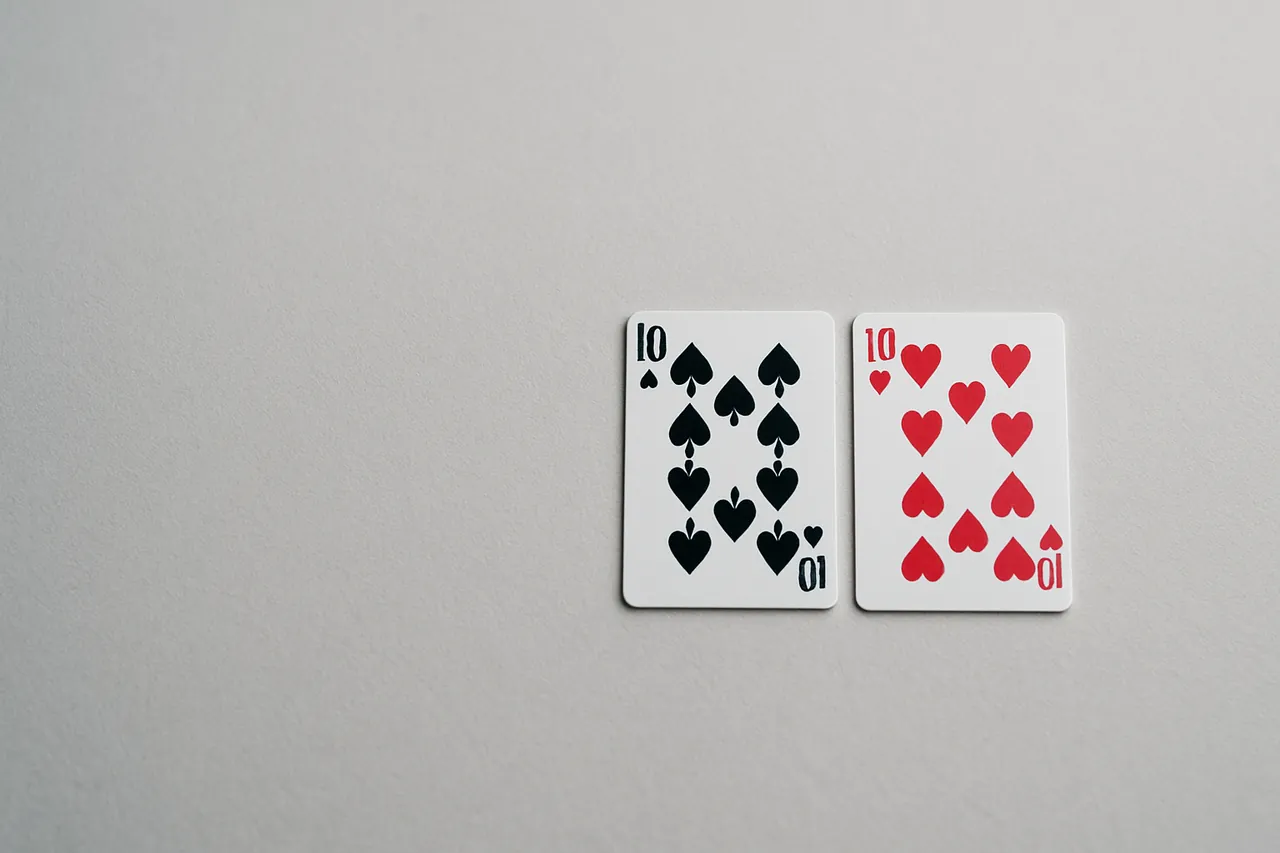
Tens or Better differs from Jacks or Better in one rule: a pair of tens is a paying hand. Any pair from tens through aces returns the bet, a pair of nines or lower still pays nothing, there are no wild cards, and every four of a kind pays the same 25.
The pay table gives something back for that extra paying pair. The standard Tens or Better schedule, 6/5, pays 6 for a full house and 5 for a flush, where 9/6 Jacks or Better pays 9 and 6. That leaves 6/5 Tens or Better at 99.14% under perfect play, just under the 99.54% of 9/6 Jacks or Better.
Play Tens or Better Free
Try Tens or Better in demo mode, free and without registering or depositing, and practice the holds a paying ten changes.






Tens or Better Pay Tables: 6/5 and 5/4
Pays per credit at the five-credit maximum. On the 5/4 table a flush and a straight pay the same 4.
Tens or Better Schedules and Their Returns
6/5 is the standard Tens or Better schedule; 5/4 is the table on Habanero's game, set out in the next section.
Tens or Better in Our Library
Habanero's Tens or Better runs 5/4 in every hand-count version: one credit below 6/5 on both the full house and the flush.
The key number: Habanero's 5/4 table is short pay, cut below the standard 6/5 schedule: 96.95% under perfect play against 99.14%.
Below five credits the return is 96.20%, a smaller drop than usual, because this game's royal still pays 500 per credit at smaller bets.
Where the Return Comes From
A paying hand ends 49.45% of deals here, against 45.46% on 9/6 Jacks or Better, and nearly all of the difference is the pair of tens. The full house arrives as often as ever, but at 6 instead of 9 its share of the return falls from 10.41% to 6.96%.
Decisions a Paying Ten Changes
The rule: A ten is a high card in this game: it can pair into a paying hand, so it earns a place in holds that Jacks or Better would throw away.
Values below are per credit bet, averaged over every possible draw.
- A lone ten is worth keeping. Dealt 10♦ 9♣ 5♠ 4♥ 2♦ on 6/5, keep the ten by itself: worth 0.50, against 0.41 for the nine and ten together and 0.37 for drawing five new cards.
- Four to a straight flush beats a pair of tens. Dealt 10♠ 10♥ 9♠ 8♠ 7♠, break the paying pair and keep 7♠ 8♠ 9♠ 10♠: worth 3.43, against 1.51 for the tens. On the 5/4 table the gap is almost unchanged, 3.28 against 1.50.
Borrowing the Jacks or Better holds is expensive here: perfect 9/6 Jacks or Better strategy on a 6/5 machine gives up 0.839 points of return, a price the strategy guide puts beside other borrowed strategies.
The Hold List for 6/5
Keep the first line that fits the deal. In this list a high card means a ten, jack, queen, king or ace, which is why there is no separate line for a ten with a suited high card.
- Royal flush, straight flush or four of a kind.
- Four to a royal flush, even when that breaks a made flush, straight or paying pair.
- A full house, flush or straight.
- Four to a straight flush.
- Three of a kind.
- Two pair.
- A pair of tens or higher.
- Three to a royal flush.
- Four to a flush.
- A low pair (twos through nines).
- Four to an outside straight.
- Three to a straight flush with two high cards.
- Four to an inside straight with four high cards.
- Two suited high cards.
- Three to a straight flush with one high card.
- Four to an inside straight with three high cards.
- Two unsuited high cards.
- One high card.
- Three to a straight flush with no high card.
- Nothing: draw five new cards.
Following this list costs 0.058 points on 6/5: it returns 99.08% where perfect play returns 99.14%. On the 5/4 table four to an inside straight with four high cards moves above three to a straight flush with two high cards, and three to a straight flush with one high card leaves the list; that version plays at 96.88% against 96.95%.
Tens or Better FAQ
No. In Jacks or Better a pair of tens pays nothing, so a lone ten has little to offer. Dealt 10♠ 8♦ 6♣ 4♥ 3♠, drawing five new cards is worth 0.36 per credit bet there, against 0.33 for keeping the ten.
Perfect play discards all five on 1.32% of deals on 6/5, well under the 3.25% of 9/6 Jacks or Better. With tens counted as high cards, far fewer deals are left with nothing worth keeping.
No. Measured in units of one hand's stake, the standard deviation is 4.42 per hand on 6/5, the same as 9/6 Jacks or Better, and 4.38 on 5/4. The extra paying pairs are even-money wins, which barely move the spread of results.
Yes, slightly. With perfect play a royal lands about once every 38,937 hands on 6/5 and once in 39,108 on the 5/4 table, a little more often than in 9/6 Jacks or Better.